1
2
3
4
5
6
7
8
9
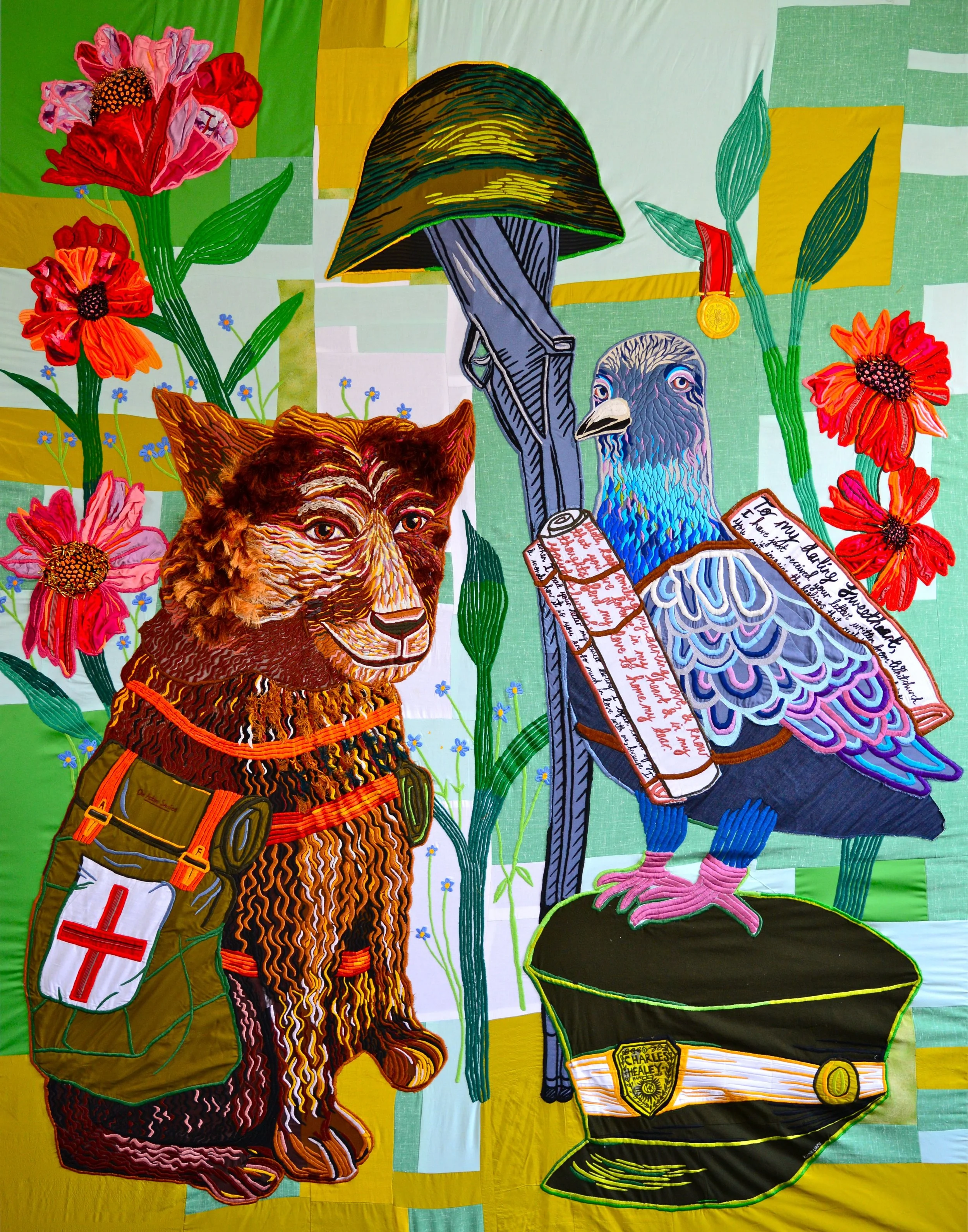
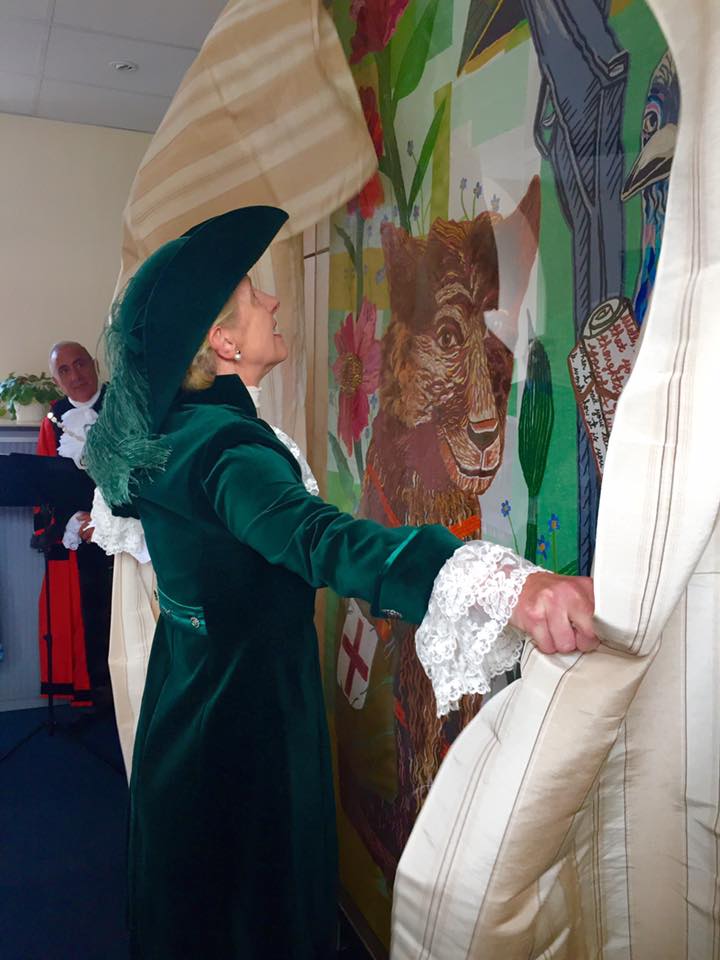
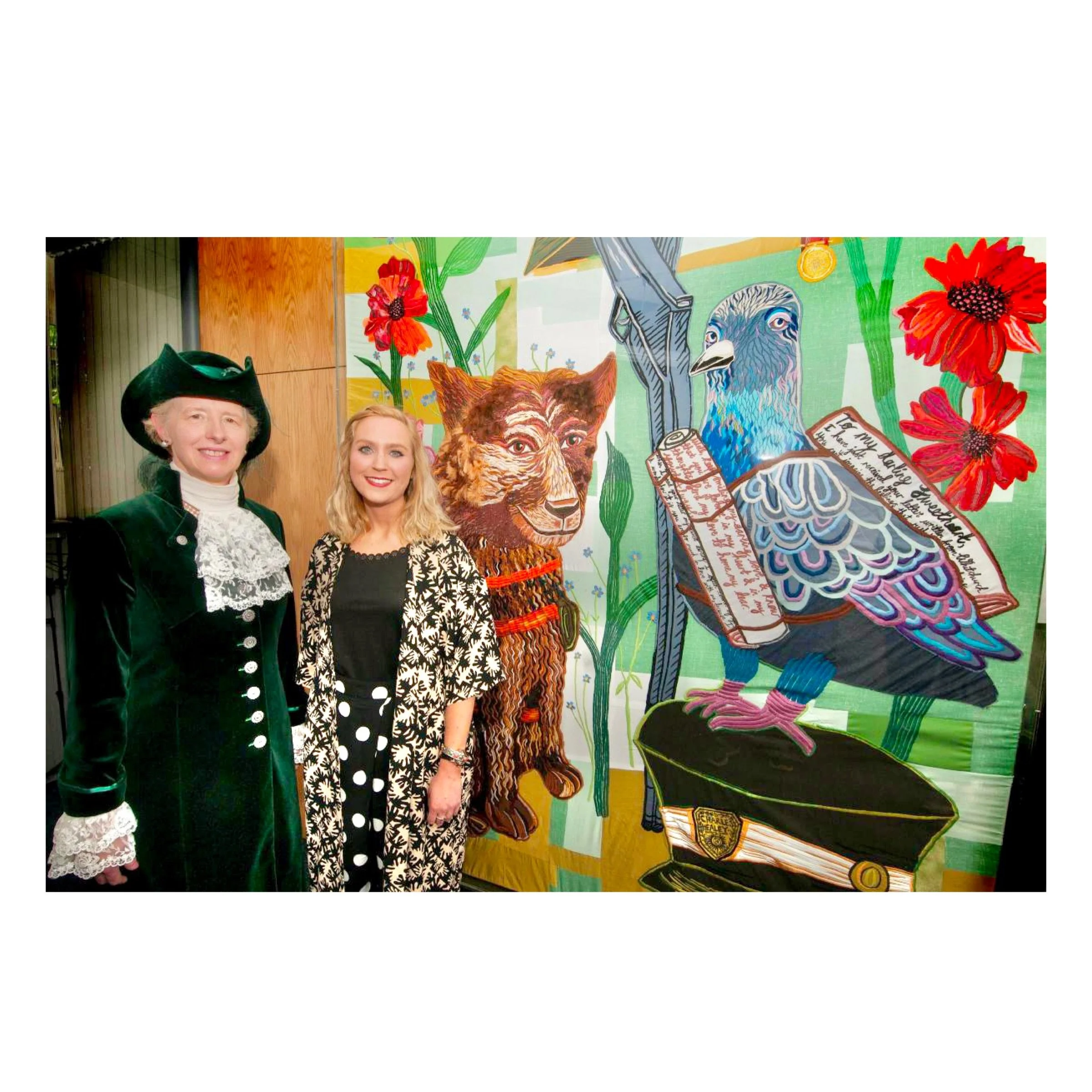
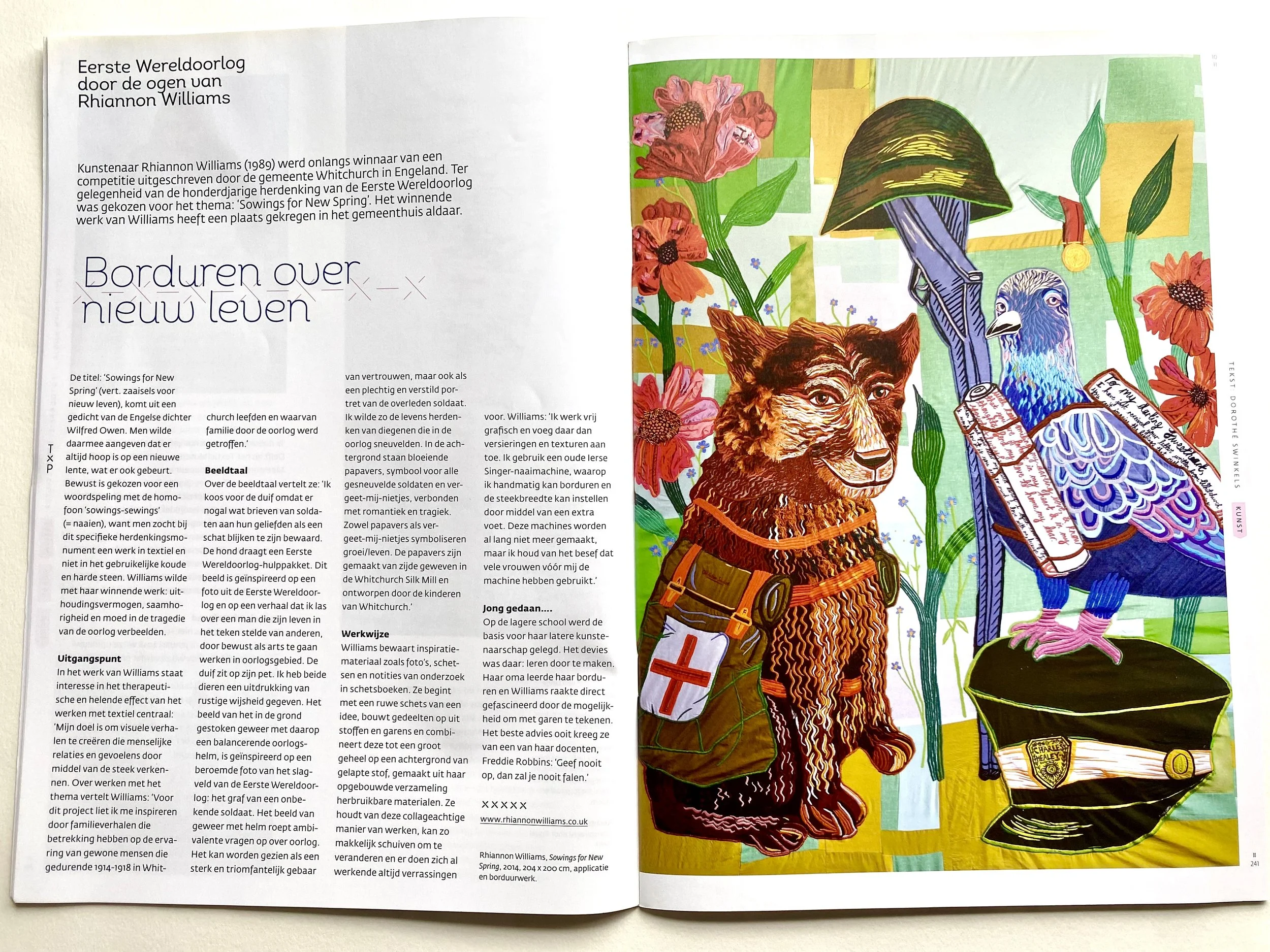
Sowings For New Spring: A textiles hanging commissioned by Hampshire Council for Whitchurch Town Hall to commemorate the First World War.
The word ‘patchwork’ resonates imagery of homeliness, imperfection, care, and console. In piecing together the old, salvaged remnants of cloth, a beautiful new blanket is created, bringing use and comfort, but with old memories embedded in its fragments. I hope that this quilted, and embroidered hanging holds on to the memories of those lives taken in the wars gone by, and represents the hope, strength and endurance demonstrated by the soldiers, families, and communities involved in the First World War, and the continuing war efforts today.
In researching Whitchurch during the First World War, and the effects on the soldiers and their families fighting today, I wanted to convey four words, which I feel epitomized the struggles faced in war for communities: unity, bravery, resilience and hope.
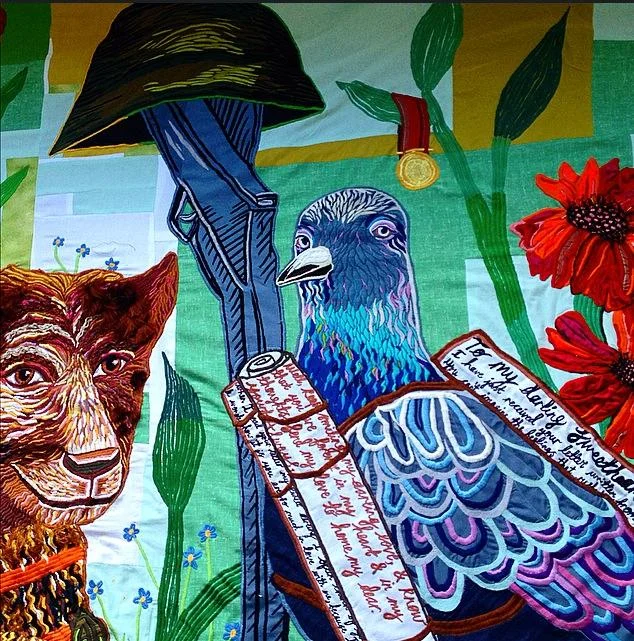
The hanging illustrates a rifle pushed into the ground, balancing a war helmet. This image is taken from the famous photograph of the First World War battlefield, marking the grave of a soldier. I feel it is necessary for the piece to silently reference the lives taken by the war. The image can be seen as both a strong and triumphant gesture of confidence, by digging the rifle boldly into the ground, or as a solemn and quiet portrait of the absence of the soldier’s life. I feel that this ambivalent picture has many meanings that can provoke questions about the war.
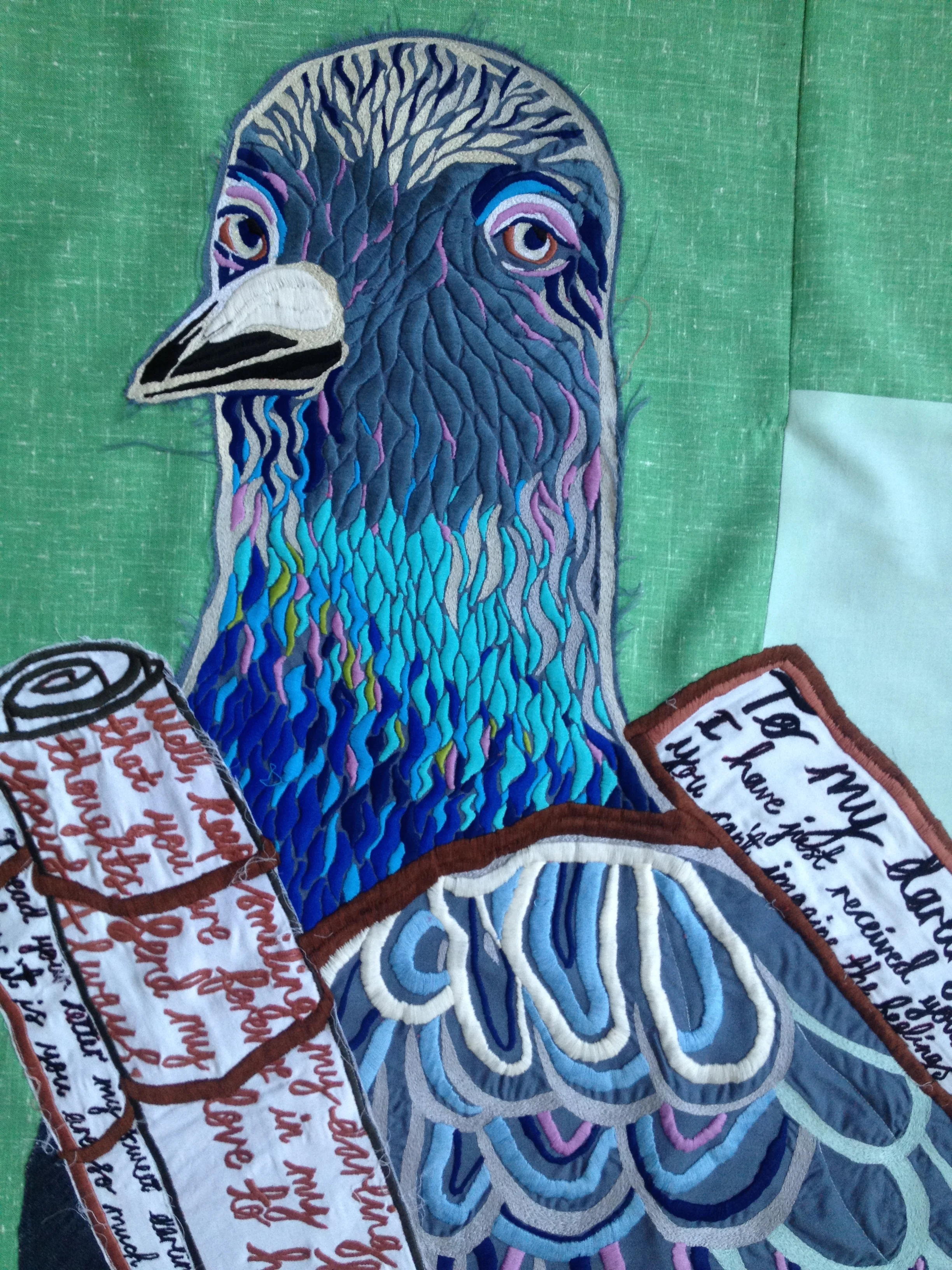
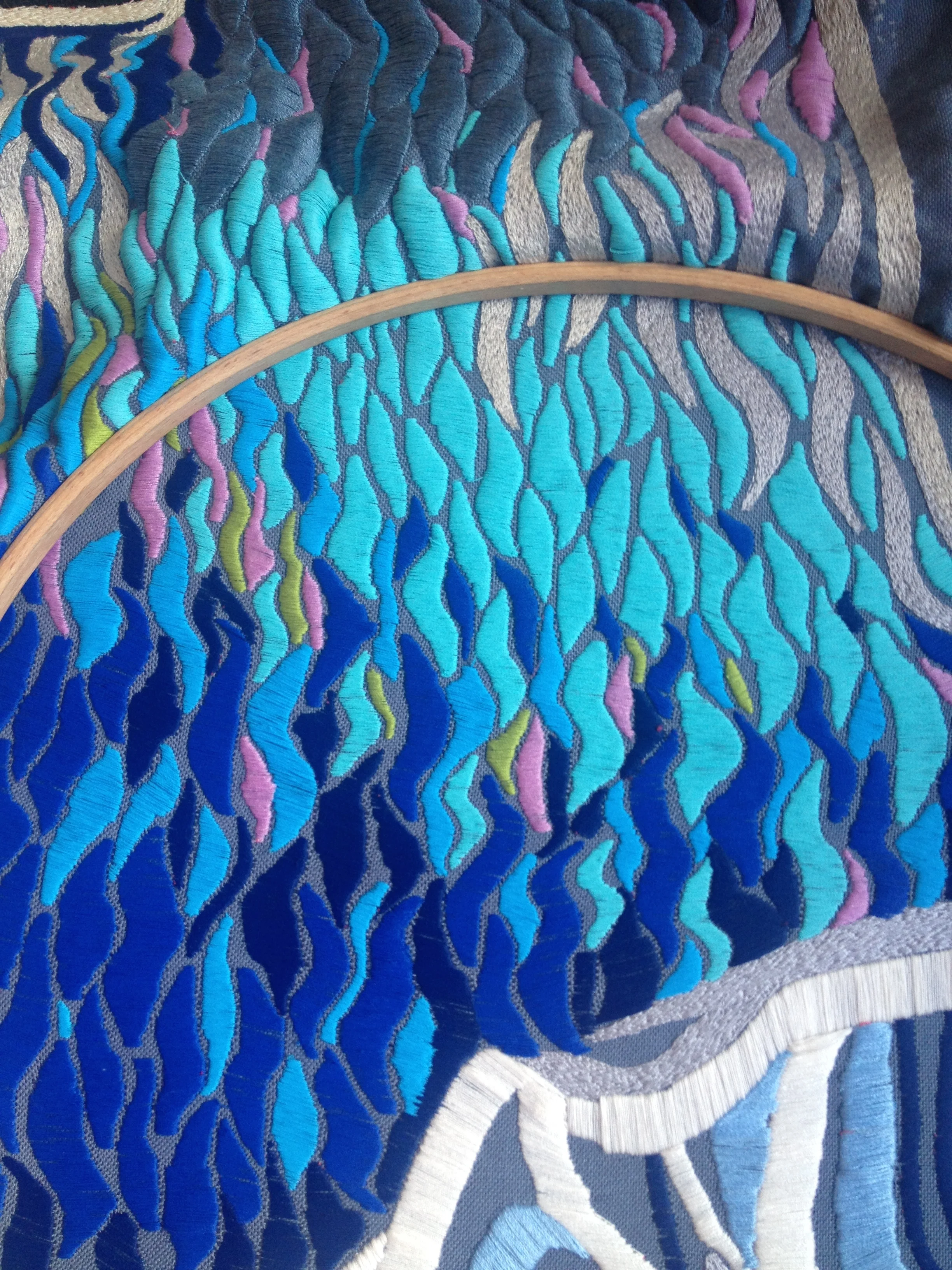
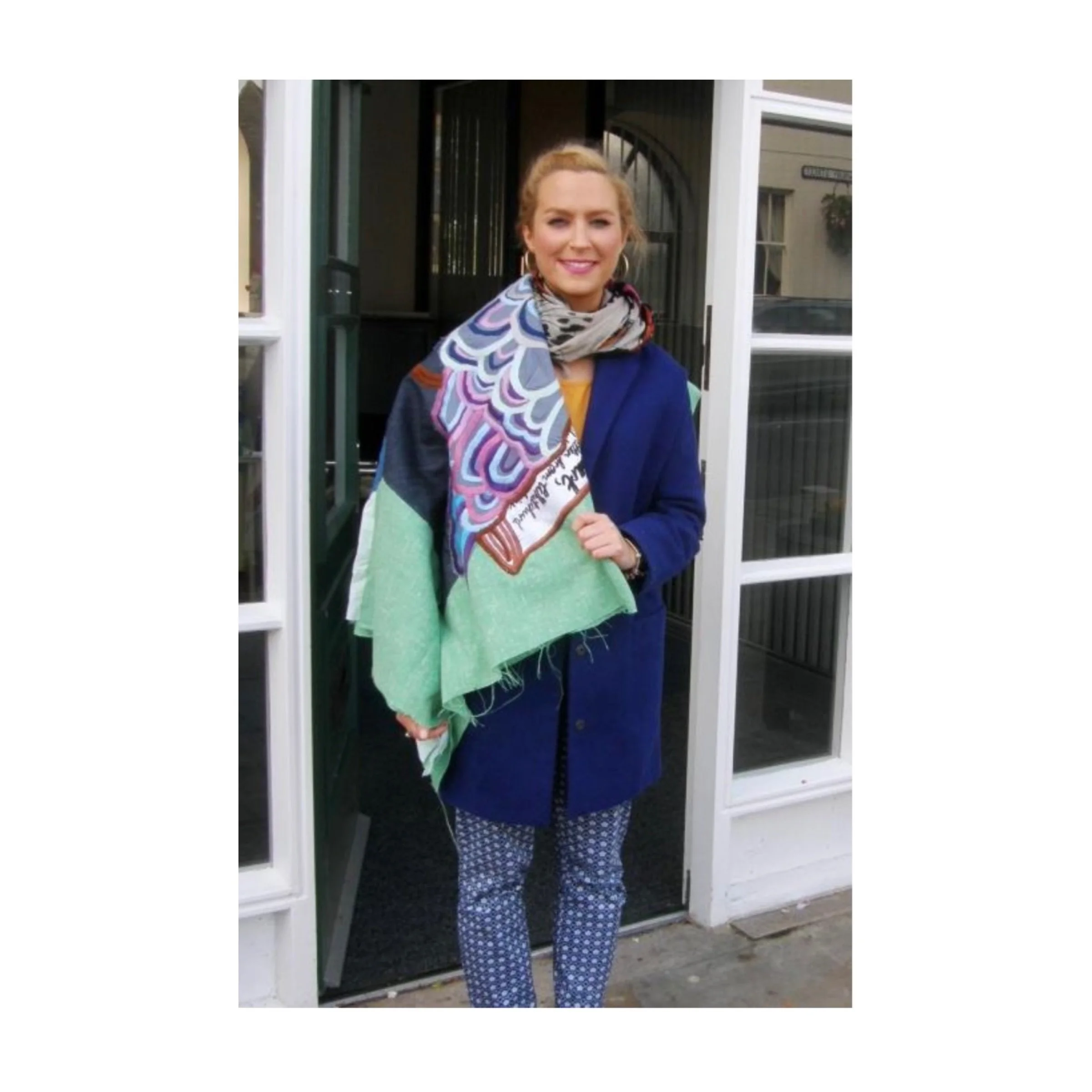
In front of the rifle, sits an embroidered dog, carrying a First World War first aid pack, and a pigeon, carrying letters from soldiers to their loved ones. These images are both inspired by real photographs taken from the First World War. I wanted to include animals, instead of depicting people, as a symbol of community and togetherness that is brought out by war. I feel that animals are timeless, and can represent a message of hope and endurance. I have given both animals, expressions of wisdom, and calm knowingness.
The pigeon is carrying letters from soldiers to their loved ones, and represents the voices of many. The letters are hopeful, and convey the common threads of missing home, and sending love, which represents many lives, and remembers the lives of the women, missing their husbands, and helping the war efforts from home. The writing on the letters is taken from real letters sent during the First World War, and includes a letter referencing Whitchurch. Letters are relevant both to the First World War, and to the lives of soldiers and their families today.
The first aid dog is inspired by the story of Charles Healey, told by John Kitching, and of his sacrifice of helping others during the war, by becoming a doctor. He inspired John Kitching to live his life helping others, and the dog represents the efforts of many doctors and nurses that helped to save lives during the war.
In the background of the piece, are embroidered large, blooming poppies and forget-me-nots, growing from the ground. The poppies are made with silk woven in the Whitchurch Silk Mill, and designed by the children of Whitchurch. These are obviously flowers, which symbolize the war, but here they represent growth and hope. Hanging from a branch of an over-sized poppy, is a medal, commemorating the gallantry of the soldiers. This medal represents the lives and efforts of thousands of people, and it is supported using the silk fabric, designed by the young people of Whitchurch as part of their memorial to ’14-18.
The embroidery is stitched into a background of fresh, green patchwork, much of which was made by hand in the Whitchurch Silk Mill. This patchwork style references the make-do-and-mend culture of the war, and encourages a sense of nostalgia. The colours are positive and hopeful, inspiring a sense of faith, courage and optimism.
The making of the piece was a long process, summing over 1000 hours. I embroidered it without the use of digital machinery, beading by hand, and using an old Singer Irish machine, which ceased production in the 1950s. As a result, it was a very contemplative experience for me. My mind wandered on the lives of those I was stitching for, and all the people that would see the piece. I naturally thought about my own life; my own concerns, and hopes for the future. I hope that this piece remembers the lives of all of those involved in the war, the tragedies that took the lives of many, and the pain suffered by their families. But above all, I wish for this piece to embody hope: The hope, endurance and positivity that seeps it’s way through the tragedy of war, through the kindness and hearts of communities, and the courage of individuals.